Dr Oliver McLeod
The Geology of Karioi.
While many may not associate Raglan with volcanic activity, Karioi has played a central role in shaping the region’s rich and storied history. Raglan’s famous surf breaks continue to be sculpted by ancient lava flows.
For Oliver McLeod, a dedicated geological researcher currently working for the Waikato Regional Council, Karioi is much more than a natural landmark. This ancestral maunga is a window into the past, blending scientific exploration with the deep cultural heritage and mātauranga of the area.
The results of Oliver’s work are seen in his book Geology of Karioi Volcano, Aotearoa New Zealand. Oliver’s book is accompanied by a detailed geological map of Karioi and the surrounding landscape. Working closely with hapū, the map includes place names which have been preserved in oral histories for centuries.
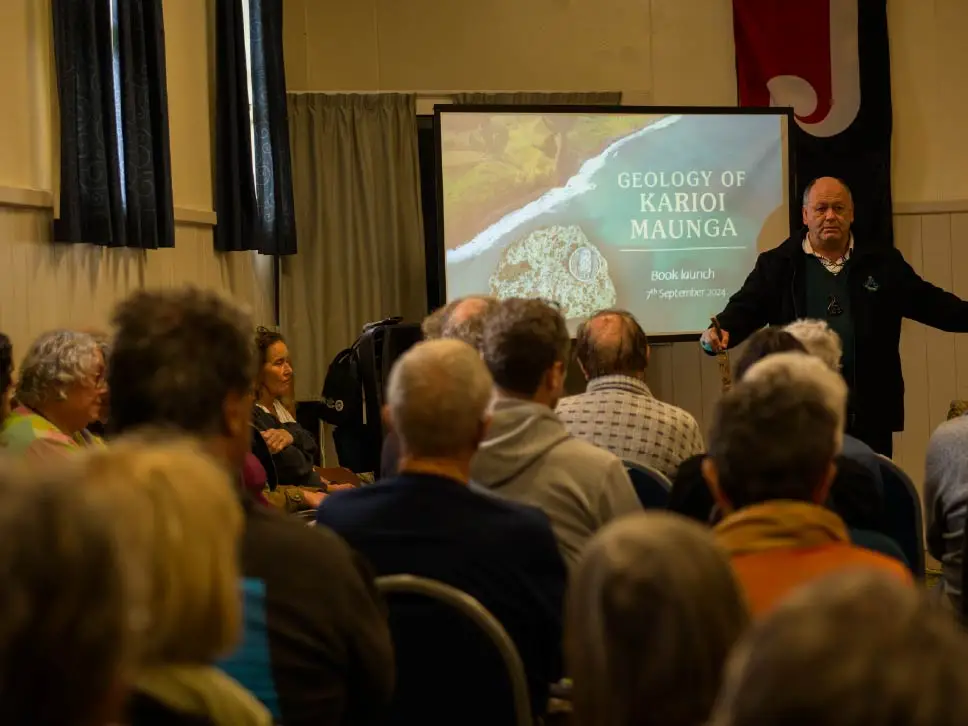
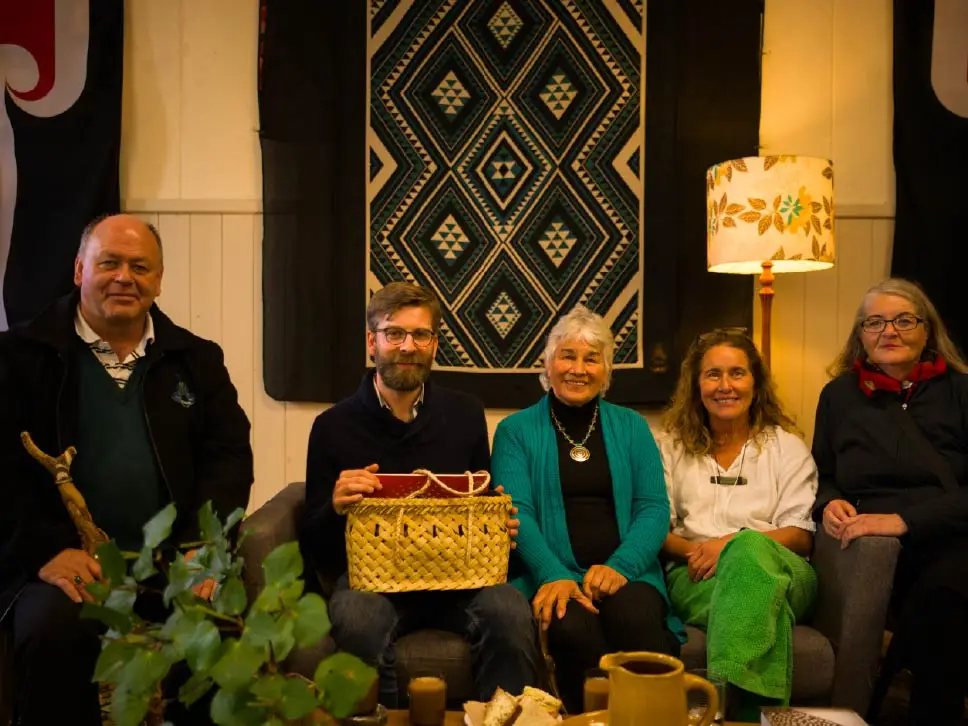
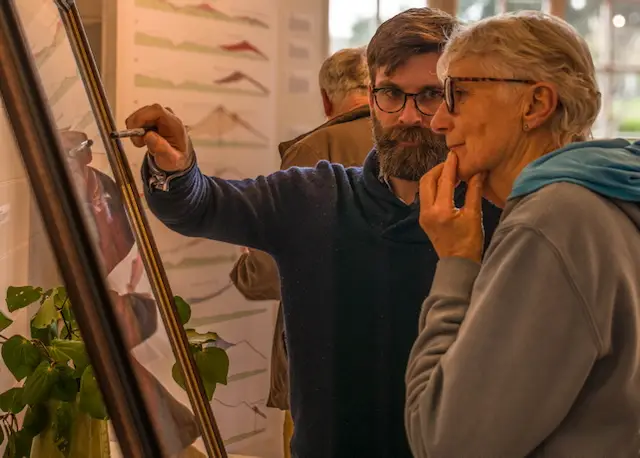
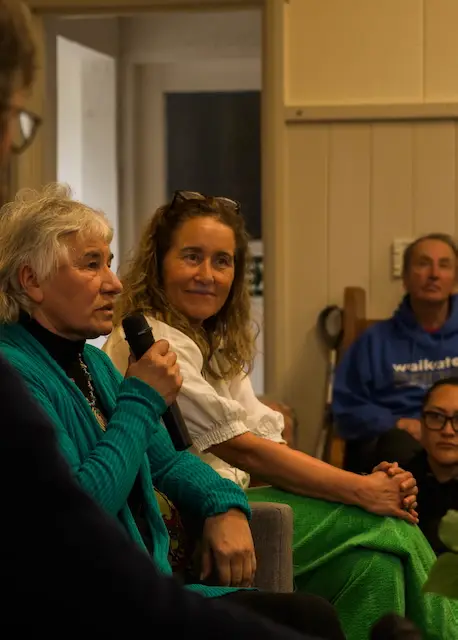
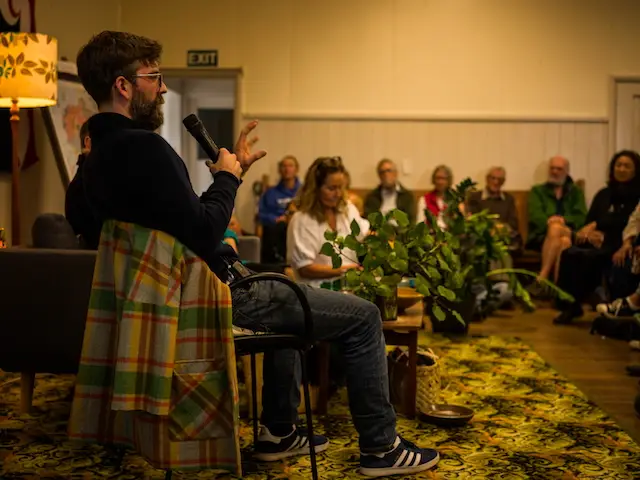
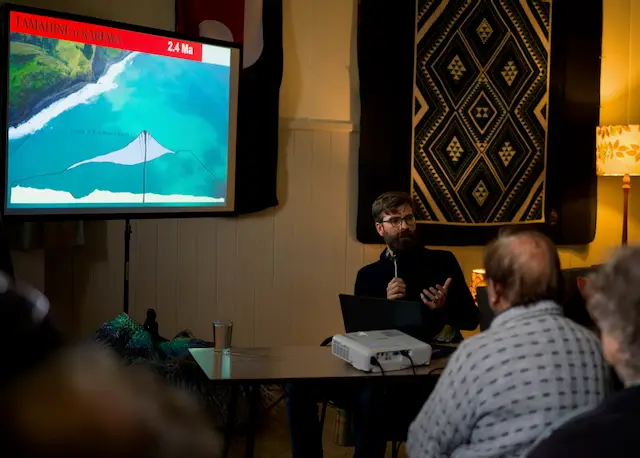
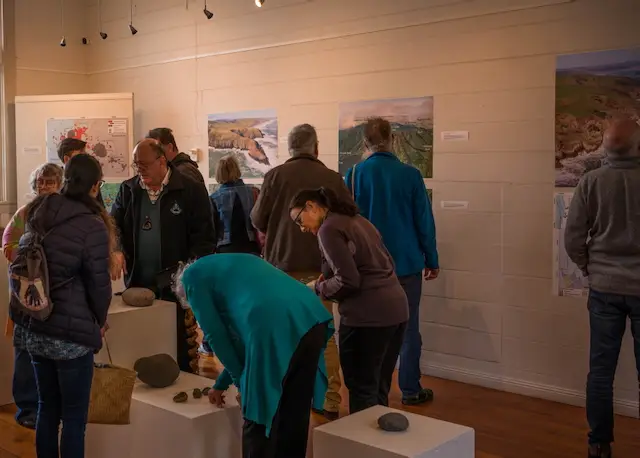
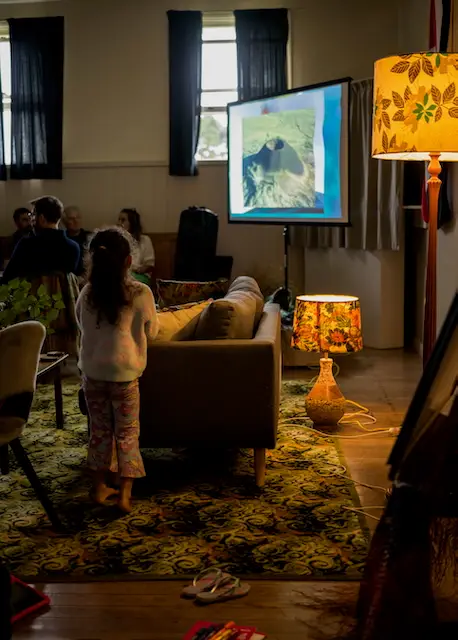
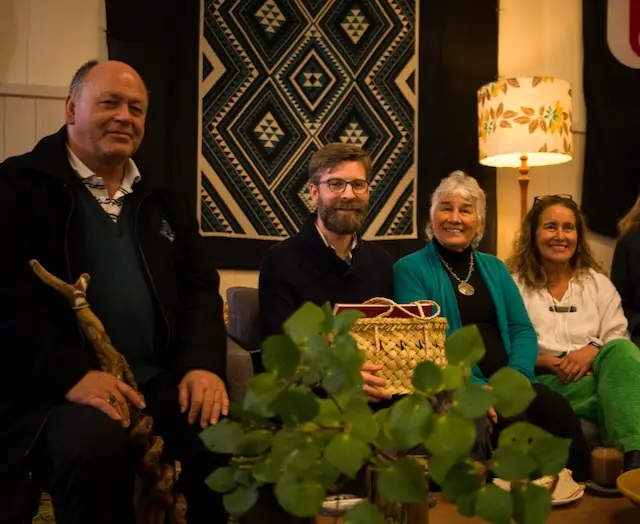
To celebrate the culmination of a five-year project, Oliver partnered with Raglan Naturally Community Trust for the official book launch, presentation, panel discussion and accompanying exhibition at the Raglan Old School Arts Centre in September 2024.
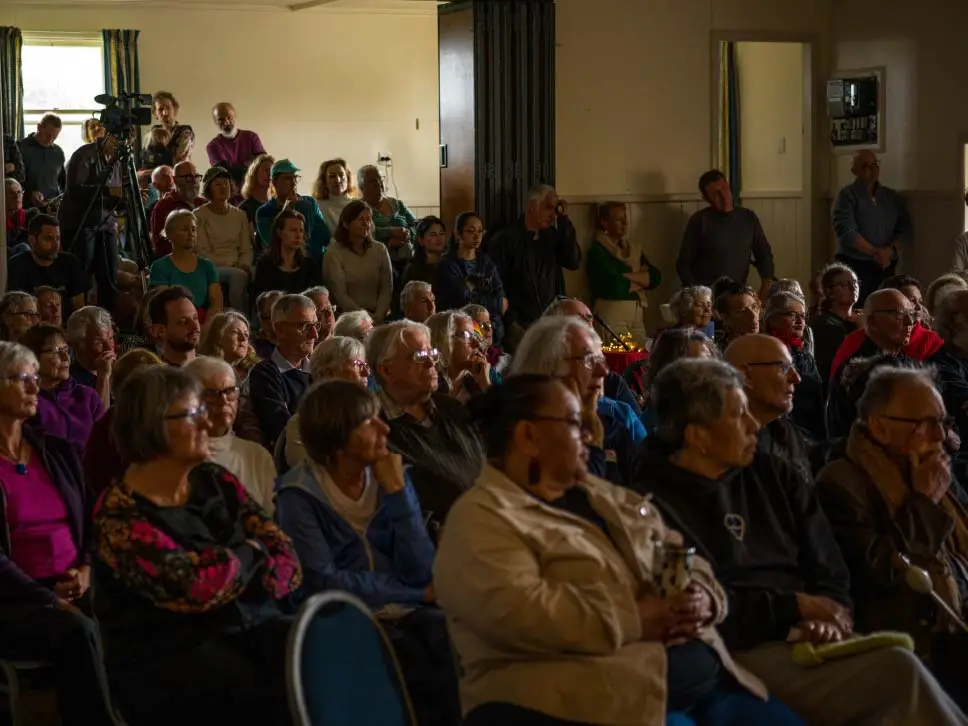
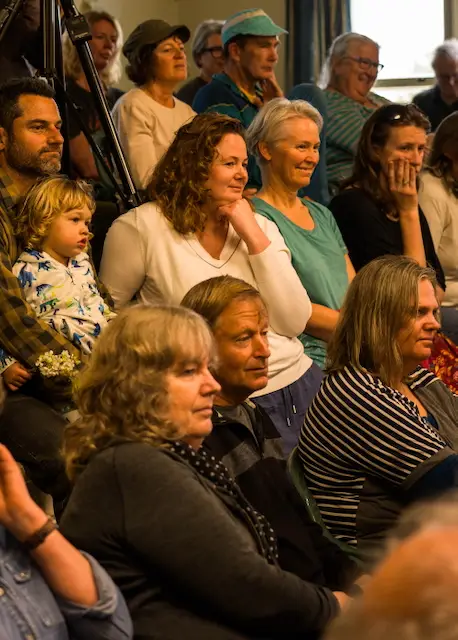
Reflecting the importance for our community of stories which connect people to place, the book launch was filled to capacity.
A story of deep connection
Uncovering geological secrets.
Oliver’s PhD research resulted in the creation of a detailed geological map of Pirongia and the publication of his book, ‘Geology of the Pirongia Volcano’ in 2020. Following this project, Oliver’s interest naturally shifted to Karioi, the sister maunga of Pirongia.
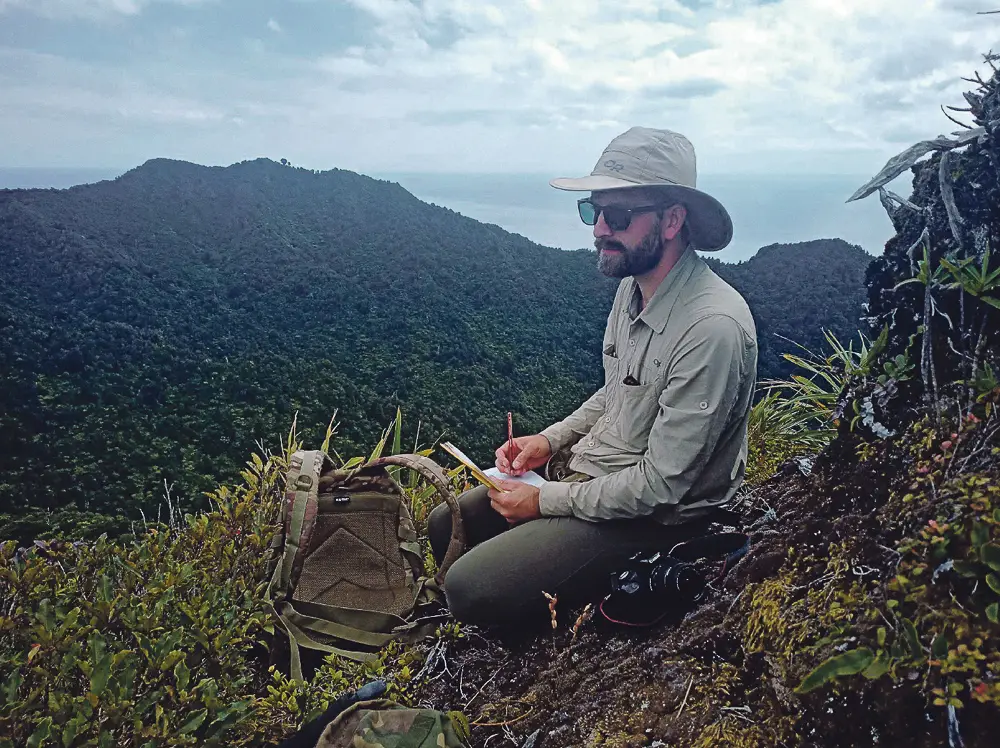
To uncover the geological secrets of Karioi, Oliver spent many months from 2020 and early 2022 hiking up and around the mountain.
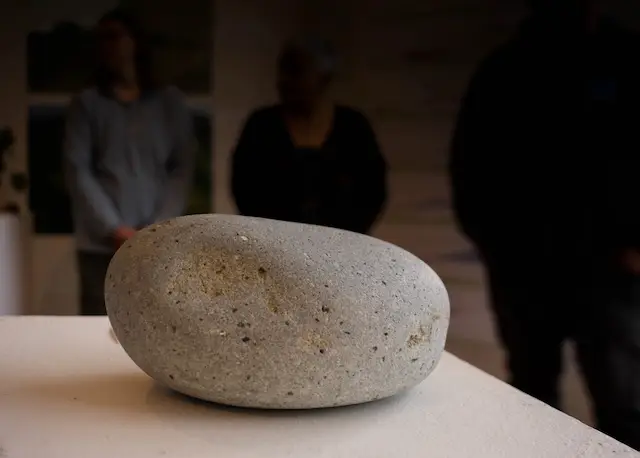
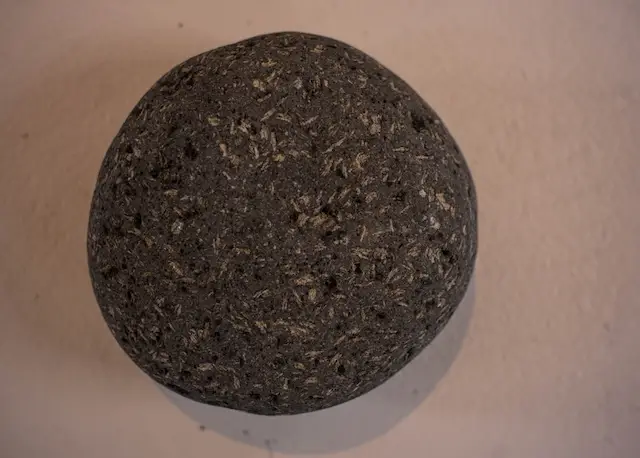
Equipped with a backpack, his hammer, and GPS, Oliver collected hundreds of rock samples. Some of these samples were sent to Japan for argon dating to determine the ages of Karioi’s oldest and youngest lava flows – a first for this area.
Oliver’s findings reveal a complex history of volcanic activity that lasted around 300,000 years, during which Karioi evolved from explosive ash rings and scoria cones into a large stratovolcano.
However, for Oliver, the story of Karioi is not just one of volcanic activity. It is a story of whakapapa and the deep connections between the land and the people who have lived with the maunga for generations.
“Studying Karioi as pure science leaves many missing pieces. The full story of Karioi is a story of whakapapa, extending from the deep geological past to the present day and into the future.”
Geological and cultural landscapes
The story of the people.
Oliver’s work led him to engage deeply with the local community, learning from those who have lived in the shadow of Karioi for generations. As Oliver’s research progressed, it became clear that the geological map he was creating would also tell the story of the people who have called Karioi home. Kaumātua shared place names preserved in oral history for centuries. Intertwining geological and cultural landscapes, these names are now included in the geological map – a powerful reminder that the history of a place is not just written in the rocks but also in the lives of those who have lived there.
The Raglan Chronicle
Scientist unveils the volcanic history of Karioi
Karioi, cloaked in native forest and rising dramatically along our rugged west coast, is more than just an iconic feature of the Whāingaroa landscape.
While many may not immediately associate Raglan with volcanic activity, Karioi has played a central role in shaping the region’s rich and storied history. For Oliver McLeod, a dedicated geological researcher currently working for the Waikato Regional Council, Karioi is much more than a natural landmark—this ancestral maunga is a window into the past, blending scientific exploration with the deep cultural heritage and mātauranga of the area.
Oliver’s journey into geology began in his childhood, growing up on Kawau Island in the Hauraki Gulf and Auckland, where he could view Rangitoto, Mt Albert, and Orakei Basin. As a young boy, he would climb to the highest points near him to sit and draw maps of the terrain and natural landscape around him. It was an early hint of the path he would later take, leading him to study geology at Otago University.